É TODA UMA CRENÇA NA INVENCIBILIDADE DA ESTUPIDEZ
PASSA-SE DO INSULTO FÁCIL À BIÓPSIA OU AUTÓPSIA DOS CAÍDOS
IT'S SIMPLE, WE NEED TO KILL BATMAN....
PUT PUTIN IN THAT
IT'S SIMPLE, ASSIS OU ASSAD, SEGURO NAS COSTAS DE SOARES
OU SOARES NAS COSTAS DE SEGURO
PARA AS MEMÓRIAS FACEBOOKIANAS DO FUTURO
TANTO FAX
dissabte, 30 d’agost del 2014
LE CRU ET LE CRUEL IN FACEBOOK A NOÇÃO DO PODRE DOS AMERICANOS FEZ COM QUE SE DESTRUISSEM OS QUEIJOS DA NORMANDIA IN 1944 SEGUNDO LÉVIS O STRAUSS ...Charles very Vaiscus da Gama Gay or amusing Henry Troyat look Vasques really ?I'm going to take the liberty ....give me liberty or death --to express how amusing it can be to observe a couple no a couple of of cyber-gay's Sudbury themselfs into grammatical death ...or it's simple. a live one? on a writter's FB ? funbumbum? page. Better only to top it (nã usas bírgulas pá? all up with "the computer say's no....google said 'no' to your sentence" ...... It's just to cry for (laughing). Cheers to me and all who read this entire script with a dreadful pacience, to Afonso Morura and of course the two geniuses that provided this short laugh. bolas pá encontraste os filhos da droga num caixote do círculo dos leitores? Gosto · há 39 minutos Jabneel Mascarenhas eh pá esquecia-me do Português deportado por crimes? foram dos sexuais ao menos como os de New Bedford Charles Henry bolas deves ter apanhado muita porrada na primária ao menos num te chamaram Cédric ...ou AFonso ou Dinis.... Gosto · há 35 minutos Jabneel Mascarenhas To be honest, my good Charles the first of England ou o segundo na bicha do water closet in Sudbury there are places where the dialogue or your dialogue it's simple. or it's a little clunky, you should yes you should use some. just some Olde Englyshe this charles named vais de quê is perhaps the most irritating gay moron. Generally though, the dialogue’s not as bad as some Obama's or Sans Payo's that's i’ve eard from time to time. I can, yes i can ...do the word cancan or the cancan chadash see why some might see it's simple .... as ‘sheep fuckers ’ – there’s a lot of info-dumping in charles but not buck o visk , and dialogue in coca lines that can stray into monologue at times, although, it's simple(again in simplex times from Socrates the greek that like to fuck small boys for the greater good of Athenas), I’ve read worse from time to time oh charles da gama gay..... this may be attributable to masturmason masturmação excessiva em loggia excusas escusas....bolas deves estar em Portucalé há muito tempo se bem que it's simple, the moron fabric is extense in both sides of the.....:_____________----Put in some chose ó koiso sozé da gamma gay já se sabe ....é cá uma panaskêra nazional na anal do facebook da retrós

dijous, 21 d’agost del 2014
OS ATRIBUTOS DO ESPAÇO E DO TEMPO QUE SÃO O INFINITO E A ETERNIDADE ....UMA VIDA LONGA E MAL USADA A DEGOLAR INFIÉIS ...O AR TINHA UM SABOR FRANCO E ACRE POIS A CORDITE DA ARTILHARIA DO ESTADO ISLÂMICO ANDAVA NO AR....
PLANETAS SEMI-JOVENS COM AS CROSTAS MAL FORMADAS
ENORMES LAGOS DE LAVA EM FUSÃO
CAMPOS DE MAGMA BORBULHANTE
O MAGMA QUANDO BORBULHA CHAMA-SE LAVA POIS DESGAZEIFICA
O CÉU COM NUVENS FERVENTES DE POEIRA E GASES VENENOSOS
VELHOS PLANETAS, CAINDO PARA A MORTE, OCEANOS SECOS, ATMOSFERA
DISSIPADA
PLANETAS GASOSOS, BERLINDES GIGANTESCOS COM FAIXAS COLORIDAS
S.T.A.R?
NASCIDO ALGURES EM 1971 NU NO MARKET TERIA UNS DOIS ANTEPASSADOS NASCIDOS NOS ANOS 30 OU 40 QUE TOMAVAM BANHOS DE ÁGUA FRIA COM BALDES POIS A ÁGUA CANALIZADA ERA ESCASSA E TAMBÉM CAGAVAM NA RUA OU EM PENICOS OU TALVEZ TIRE A SUA DIGAMOS MANIA ANCESTRAL DOS 4 ANTEPASSADOS QUE NASCERAM NO INÍCIO DO SÉCULO XX OU NOS FINS DO XIX ...SEI LÁ DIGAMOS 1890-1900 OU COISO ASSIS ...SE NÃO FOI DESSES SERIA DOS OUTROS 8 ESCLERÓTICOS NASCIDOS ENTRE 1850 E 1870....OU DOS 16 ANTEPASSADOS NASCIDOS NO TAL MARKET EM 1830 OU DOS 32 ANTEPASSADOS LÁ DE 1810...OU DOS 64....QUE NÃO PERDERAM A CABEÇA EM 1789..128 ANTEPASSADOS EM 1760...256 EM 1735...512 LÁ PARA 1710....1024 ANTEPASSADOS EM 1680...4096 NO TEMPO DO FILIPE III....UNS 32.768 LÁ NO TEMPO DE CAMÕES .....262.144 ANTEPASSADOS QUE SOBREVIVERAM A ALJUBE ARROTA ...TERIA 2.097.152 ANTEPASSADOS ANTES DA PESTE NEGRA CHEGAR À EUROPA E UNS 16 MILHÕES 777 MIL 216 ANTEPASSADOS QUE SE LAVAVAM VESTIDOS QUANDO COMEÇAVA O VERÃO LÁ PELOS DIAS EM QUE IMPORTÁMOS UM GAJO FRANCÊS PRA PINOCAR COM UMA TAL DE URRACA E AS IRMÃS DELA ....ORA POR ESTAS CONTAS TERIA UNS 536 MILHÕES 840 MIL E 912 ANTEPASSADOS QUE SÓ FAZIAM GRAFITTIS EM FOSCÔA E SÓ SE LAVAVAM QUANDO CHOVIA E ÀS VEZES NEM ISSO...O QUE É MUITO ANTEPASSADO MESMO METENDO A MACACADA TODA DA ÉPOCA AO BARULHO ....RESUMINDO AQUILO ERA UMA REBALDARIA SEXUAL E FODIAM TODOS UNS A PACIÊNCIA AOS OUTROS E TUDO POR SE LAVAREM POUCO ...LOGO ACHO BEM QUE DIGAM QUE JÁ NÃO SÃO DESSES E ALÉM DE NÃO ARRIMAREM NOS ANTEPASSADOS INTÉ TOMAM BANHO E DE ÁGUA FRIA POIS INDA NÃO DESCOBRIRAM O FOGO....BARIL MEUS COISINHOS PÁS...
NÃO HAVIA MUITOS TRANSPORTES NO TEMPO DOS NU NO'S MARKET'S
E POR ISSO A CONSANGUINIDADE ERA ELEVADA
VAI DAÍ ....DAÍ LEVA ACENTO PAR LAMENTAR?
(GRANDE NÚMERO DE INCESTUOSIDADE ....AMAI O PRÓXIMO
QUE O DISTANTE É MAIS DIFÍCIL
POIS O TAMANHO DO PAVIO É CURTO....OU SMALL PRA ANGLO-SEXÓNICO
SENDO TUTTI PARENTES AFASTADOS
ANDAMOS EM GUERRA CIVIL COM OS DO ESTADO ISLÂMICO
QUE NEM SE LAVAM DEPOIS DE ANDAR A CORTAR PESCOÇOS NO DESERTO
E QUANDO SE LAVAM FAZEM-NO COM ÁGUA QUENTE OS MALANDROS...
E INDA POR CIMA AQUECEM-NA DE GRAÇA
dilluns, 18 d’agost del 2014
The plot of "Time Pawn" is as follows. James Parsons, a doctor living in 21st Century New York, is on his way to work in his remotely controlled car one morning. The control suddenly fail and the vehicle crashes. Parsons is thrown clear and into some field of force. When he regains consciousness he finds himself outside a strange city at night. The city is unlike any he has ever seen – the spires were not his own" – and the stars are unfamiliar. He rather quickly realizes that he is in the future and he accepts this extraordinary fact without too much discomfort. He is still holding his medical case and assures himself that, no matter where he is, the civilization will need a competent physician. Indeed, he is excited by the idea and makes his way toward the city via a multi-ramped highway. Parsons is picked up by a youth named Wade who wears strange robes and an Eagle emblem. He offers to drive Parsons into the city. Wade is no more than 20 years old. More significantly, he appears to be a full-blooded American Indian. He speaks a strange polyglot language, a bizarre combination of Latin and Anglo-Saxon that Parsons has little trouble understanding him. Indeed, Phil rather rushes over a good number of points that might make a discerning reader raise an eyebrow. Phil had laboriously constructed this new language and clearly wanted to try it out. The chances of Parsons really being able to understand such an improbable tongue are nil and Phil quickly drops the whole matter and switches to regular English. After hearing Parsons story Wade confirms that this is indeed his future. It is 700 years after "the War" in the 21st Century and a new society has grown up, one that barely remembers Parson’s era. This society is organized into clans grouped around animal totems such as Eagle, Wolf and Bear. The population is now very young and all of full-blooded American Indian stock. Parsons is White and the people he meets are all repelled by his skin color. Wade takes Parsons to a place in the city and introduces him to a young woman named Icara. She questions the two of them and it is here that a number of strange terms appear: "Soul Cube," "the Fountain," "the Lists," and "Loris." Other people enter the room including a young man named Kem who insists that Icara leave with him. She refuses and the two struggle. Kem shoots Icara with a terrible weapon that cuts her to pieces. This scene of graphic violence is quite shocking given Phil’s usual restraint in this matter. As she lies dying the other sends for "the Euthanor" but Parsons immediately opens his medical case and attempts to save her. Using 21st Century medical technology he is able to stabilize her. But when the crowd realizes that he is actually saving her life they react in horror and beat Parsons into unconsciousness. Parsons regains consciousness in a new place surrounded by white robed young men and women. A hospital? But he realizes that this society has no hospitals and no doctors. They use euthanasia. Parsons is in a government center called the Fountain. The Director of the Fountain, a man named Stenog, questions him. At thirty, Stenog is the oldest person in the room. From him Parsons learns that healing is a crime in this society and that he will be sent to a prison colony on Mars as soon as his interrogation is complete. Parsons eventually learns that the average age in the future is fifteen. Society revolves around the operation of the Soul Cube – an immense "cold-pack" unit in which is stored the total reproductive future of mankind in the form of arrested zygotes. When a person dies a new zygote is allowed to begin developing. Meanwhile, at the other end of the process, a fully formed fetus, frozen until needed, emerges from the Cube and goes to the tribe that suffered the death. In this way the population of the planet is stabilized. Contribution of gametes to the Cube is regulated by the Lists – contests of physical and mental ability arranged among clan lines with the winners donating the majority of the new gametes to the Cube for future fertilization. In this way only the best and the brightest gametes are available and so the human race continuously improves. Stenog remarks that the Wolf Clan had recently triumphed in the Lists and made a major contribution to the Cube. This is the sole form of reproduction permitted. "Unauthorized zygote production" is both illegal and impossible as males are sterilized at birth. The Cube has the only source of male gametes, frozen within the Cube for later fertilization. (Phil is at great pains to avoid the terms "sperm" and "ovum" for some reason. Maybe he thought "gametes" sounded more futuristic.) To the people of the future, earlier societies’ use of birth control – "rassmort" ("race death," presumably) – is an incredible perversion. The reason medical science and the healing arts are illegal is that this society looks upon death as something to be embraced for the good of the clan. When a person dies a superior individual replaces him or her, hence the clan as a whole is strengthened. By saving Icara Parsons saddled her clan with a person who, because of her injuries, would drag them down in the Lists. Her continued existence damaged the clan’s chance to contribute their gametes to the Cube. In this society such an action is intolerable. Indeed, after swearing out a legal action against Parsons, Icara immediately had herself euthanized. The details of this brave new world allow Stenog and Parsons to discuss the whole concept of death within their different cultures, with Parsons coming out rather the worse in the debate. Stenog and his colleagues make an effort to understand Parsons and his profession as a healer but the concept is too alien to their manner of life. They bear him no ill will but he has no place in their society, has transgressed their most basic laws and so must be exiled to Mars. Parsons is stuffed into a one-way rocket and launched into space but something goes wrong and the rocket crashes back to Earth. When he recovers (this is the third time he’s been rendered unconscious since he left home in the 21st Century) he finds himself a prisoner of the Wolf Clan and their leader, a beautiful 35-year old woman named Loris. She and her group are responsible for Parsons’ predicament. It was they who transported him into the future via a time-dredge and later caused the rocket to crash land. They had originally planned to meet him when he first arrived by time travel is an imperfect technology and so Parsons inadvertently entered the city and came to the attention of the authorities. The reason for this elaborate conspiracy is simple: the Wolf Clan needs a doctor. They have a medical problem and want Parsons to help them. Loris takes Parsons to a secret chamber within the Wolf Clan stronghold. The Clan has a miniature Cube. Within its cold-pack field is the body of a man, perfectly preserved. Loris explains that he is Corith, the head of the Clan and her father. He died 35 years ago but was placed in cold-pack immediately after death. The Clan lacks the expertise to resuscitate him but hopes that Parson can do so. If he succeeds, Parsons will be returned to his own era. If he fails, he dies. Parsons is still recovering from the crash landing and so is allowed some time before attempting the operation. He has many questions. How had Corith died 35 years before? How did the Clan acquire cold-pack technology, which is a government monopoly? How did they happen to have a Cube ready at the exact moment they needed it to preserve their deceased leader? But Loris refuses to give him any answers and Parsons is reluctant to press her. He is already developing strong emotional and sexual feelings toward her. He also realizes that this whole situation is highly illegal and that the Clan is desperate. In any case, the Wolf Clan is the only group who can return him to the 21st Century. So, despite his misgivings, Parson agrees to help them. A large number of people gather to watch Parsons work, including a very old woman of nearly 70. She is Jepthe, Loris’ mother and the wife of Corith. Parsons notes a strong resemblance amongst all three and, indeed, all of the conspirators share the same general look. A family resemblance, Parsons realizes. But he has no time to dwell on this, nor how it happens that a 70-year old woman continues to survive in this future society, nor how a family resemblance can exist in the randomized reproductive system of the Cube. He plugs in the various devices necessary to restore life to his patient – a mechanical lung, a heart pump. Doctors in the 21st Century operate more like mechanics than in the manner we normally associate with physicians. (Eric Sweetscent, in Now Wait For Last Year, works in much the same way. In this sense even doctors resemble the typical working class protagonists of Phil’s world along with squibble repairmen and tire re-groovers.) The operation is a success and Corith revives. He is taken away to recover. Parsons then sees still another old woman in the crowd and she quite the oldest one of all. She is Nixina, the Urmutter, nearly a century old and the progenitor of all the conspirators. Jepthe and Corith are her children and their children are the secret group within the Wolf Clan. They have created an actual family, albeit incestuous, in a society that neither permits nor understands the very concept of a biological family. Dazed by these revelations, Parsons visits his patient and explains the details of his resuscitation. Corith shouts out "You damn fool! I died once to get away. Wasn’t that enough?" Then the whole story tumbles out. Nixina and Jepthe are plotting to spawn a new race by carefully manipulating the Soul Cube. They are mutants, as is Corith, and have isolated the Wolf Clan mutant gametes from those of the other tribes, forming zygotes only within their own Clan’s genetic material so that the strain breed true. Once they have reached sufficient numbers they will overthrow the government and destroy the Soul Cube. The mutant Wolf Clan alone will be permitted to reproduce and so will inherit the Earth. But they still have to use the official Soul Cube to breed; their own Cube failed in its reproductive function but could be used to preserve Corith. Corith and Jepthe bred nearly 80 children, some of whom are still in the Soul Cube waiting to be released. When Corith realized the nature of this insane conspiracy he killed himself rather than go on. Corith is crucial to the plot because he had not been sterilized; Nixina was able to spirit him away from the Fountain as a child before the operation. Corith is the only fertile male on Earth and when he committed suicide the plot was stuck in its track. But Corith was preserved in cold-pack and could be revived. For more than 30 years the conspiracy has been on hold as the Wolf Clan sought a way to bring Corith back to life. Finally they kidnapped Parsons from the past to perform the necessary procedure. Now Nixina and Jepthe plan to mate Corith with Loris and continue their breeding program. Corith begs Parsons to escape and alert the Government. Unfortunately a guard overhears them talking and calls for reinforcements. They are about to shoot Parsons when Corith pulls the heart pump from his chest and begins bleeding to death. Horrified the guards rush to help him and in the confusion Parsons escapes from the stronghold. The Clan pursues him but he manages to kill four of the guards. There is not much violence in "Time Pawn" but what there is is quite savage. For a doctor, Parson is quite a ruthless and efficient killer. He escapes finally by hijacking a car driven by a young couple (he does this by threatening to kill the girl unless her boyfriend does follows his orders, by the way) and manages to reach Stenog in the city. Stenog is not quite sure what to believe but orders the Cube to be ready for a possible attack. A Cube official tells him that Loris is already in the facility. Stenog and Parsons rush to the Cube and discover Loris calmly destroying a tape file. She admits to Stenog the details of the Wolf Clans’ plot. It’s moot now. Corith died when he tore out the pump and there is no way to save him a second time. Without his fertility and with the government now alerted the conspiracy cannot continue. There are still a number of mutant Wolf Clan zygotes in the Cube which will emerge from time to time over the next 40 centuries. Perhaps they will begin the conspiracy again. There is no way to identify them from the normal zygotes; the file she burned was the only record. And with that, "Time Pawn" draws to a close. The Wolf Clan are rounded up and exiled to Mars. Parsons is to be sent back to his own time. On the way to the time-dredge Stenog and Parsons discuss the ramifications of the mutant zygotes still in the Cube. Will Earth have to exile any unusually talented humans who emerge from the Cube to be on the safe side? But that undermines the whole point of the Lists and the Fountain. Stenog wonders if humanity will have to go back to normal reproduction, "unify reproduction and sexual intercourse into one act" again. Parsons doesn’t care. He’s returning home to his wife. Stenog shudders. "A wife. Well, almost any kind of society can exist. Almost any system of morals.’ Parson smiles and says, "Just about any. I guess you have to take the broad view of it." While certainly enjoyable as a sci-fi action story with some kinky (for 1953) subtexts, "Time Pawn" has more than a few logical lapses. For example, if all males are sterilized at birth, why do they participate in the Lists? They have no gametes to contribute to the Cube. By sterilizing male at birth the future undermines its own agenda to improve humanity; only half of the human race, the females, can contribute. The supply of male gametes in the Cube freezes male contribution to evolutionary progress to the time when the supply was first preserved. Stenog need have no fear of mutant revolutionaries climbing out of the Cube to overthrow his civilization. Any Wolf Clan zygotes that emerge will be, first, sterilized at birth if male, then distributed to whatever Clan has suffered a recent death. Without a group of conspirators operating within the Fountain the Clan will not be able to isolate these zygotes and monopolize them for their own breeding purposes. In the normal course of events, Wolf Clan genetic material will be contributed to the Cube via the Lists and their heritage either strengthen the total human gene pool or be diluted though fertilization with normal gametes. In no sense do they pose a threat to the future of humanity or the society of the Cube. And why would the future be horrified by the use of artificial birth control in the 20th and 21st Centuries? The Cube itself is a gigantic birth control system and about as "artificial" as one can imagine. It would make much more sense if they were deeply repulsed by the concept of natural impregnation and natural childbirth – things that do not ever happen in the 28th Century. Beyond these issues, the story as a whole is something of a disappointment. Characterization is weak. Most of the people in the story are mere cardboard. Parsons has a bit more depth but he must be the most unlikable protagonist Phil ever conceived. The pacing is off; events are too hurried and there is too much jumping around. There is too much "pulp fiction action" and the violence is fairly gratuitous. The whole American Indian idea doesn’t make sense nor why so unlikely a society as the Cube evolve from what must have been a genocidal world-wide war (the Caucasian race is extinct). But perhaps we need not be too critical. This is a short story written for the pulps and likely written in a hurry. And perhaps, too, with the intent to be rather shocking speaking, as it does, of sex, birth control, euthanasia, eugenics, and incest -- not, we may imagine, typical fare for SF readers in Eisenhower’s America.
the worst pkdick ever
dissabte, 26 de juliol del 2014
AVIAN TUBERCULOSIS DESTROY THE OVARIES OF A CHICKEN UND FROM UNDIFFERENTIATED GERMINAL TISSUES ....SHE HAD GROW TESTIS ....ERGO THE CHICKEN PSYCHOLOGY AND HER SEX HAD CHANGED .....ERGO TUTI GALINHA COM TUBERCULOSE FICAM MACHISTAS ....GENERALIZAÇÃO DO DIA.....ELE FICOU VIVO E FICÁMOS TODOS MAIS POBRES ...É O COMENTÁRIO SALGADO DO DIA...
GENERALIZATIONS
- 1893 - A PHYSICIAN
- THE WOMAN IS SELF-CENTERED...
PROVAVELMENTE O HOMEM ERA UM TIPO PORREIRO
SHE IS THE MOST IMPORTANT THING IN HER LIFE....OU SEJA NÃO TINHA BÉBÉS NÉ....
PSICÓLOGO ESCOLA VIENENSE 1926 - O HOMEM NÃO FALA DOS PROBLEMAS OF HUMAN RELATIONSHIP
RESUMINDO GENERALIZAÇÕES E POLÍTICOS COMO VOMITIVO
SÃO GERALMENTE RESULTADO DE PROBLEMAS PESSOAIS QUE UTILIZAM UMA ESCAPATÓRIA VIRTUAL NA POLÍTICA DE CAFÉ.....
1933 A ASCENSÃO DO NSDAP TORNARÁ BERLIM IRRECONHECÍVEL EM 10 ANOS .....
E O GAJO QUE DISSE ISTO ENGANOU-SE SÓ EM DOIS ANOS...
dimecres, 23 de juliol del 2014
It is quite astonishing to see the great demand there is, both in England and France, for dream-books, and other trash of the same kind. Two books in England enjoy an extraordinary popularity, and have run through upwards of fifty editions in as many years in London alone, besides being reprinted in Manchester, Edinburgh, Glasgow, and Dublin. One is Mother Bridget’s Dream-book and Oracle of Fate; the other is the Norwood Gipsy. It is stated, on the authority of one who is curious in these matters, that there is a demand for these works, which are sold at sums varying from a penny to sixpence, chiefly to servant-girls and imperfectly-educated people, all over the country, of upwards of eleven thousand annually; and that at no period during the last thirty years has the average number sold been less than this. The total number during this period would thus amount to 330,000.-Mummies were of several kinds, and were all of great use in magnetic medicines. Paracelsus enumerates six kinds of mummies; the first four only differing in the composition used by different people for preserving their dead, are the Egyptian, Arabian, Pisasphaltos, and Libyan. The fifth mummy of peculiar power was made from criminals that had been hanged; “for from such there is a gentle siccation, that expungeth the watery humour, without destroying the oil and spirituall, which is cherished by the heavenly luminaries, and strengthened continually by the affluence and impulses of the celestial spirits; whence it may be properly called by the name of constellated or celestial mummie.” The sixth kind of mummy was made of corpuscles, or spiritual effluences, radiated from the living body; though we cannot get very clear ideas on this head, or respecting the manner in which they were caught.—Medicina Diatastica; or, Sympathetical Mummie, abstracted from the Works of Paracelsus, and translated out of the Latin, by Fernando Parkhurst, Gent. London, 1653, pp. 2, 7. Quoted by the Foreign Quarterly Review, vol. xii. p. 415.
- his prophecy seems to have been that set forth at length in the popular Life of Mother Shipton:
“When fate to England shall restoreReturn
A king to reign as heretofore,
Great death in London shall be though,
And many houses be laid low.”
-
The London Saturday Journal of March 12th, 1842,
contains the following:—“An absurd report is gaining ground among the
weak-minded, that London will be destroyed by an earthquake on the 17th
of March, or St. Patrick’s day. This rumour is founded on the following
ancient prophecies: one professing to be pronounced in the year 1203;
the other, by Dr. Dee the astrologer, in 1598:
“In eighteen hundred and forty-two
Four things the sun shall view;
London’s rich and famous town
Hungry earth shall swallow down.
Storm and rain in France shall be,
Till every river runs a sea.
Spain shall be rent in twain,
And famine waste the land again.
So say I, the Monk of Dree,
In the twelve hundredth year and three.”
Harleian Collection (British Museum), 800 b, fol. 319.“The Lord have mercy on you all—The alarm of the population of London did not on this occasion extend beyond the wide circle of the uneducated classes, but among them it equalled that recorded in the text. It was soon afterwards stated that no such prophecy is to be found in the Harleian Ms.
Prepare yourselves for dreadful fall
Of house and land and human soul—
The measure of your sins is full.
In the year one, eight, and forty-two,
Of the year that is so new;
In the third month of that sixteen,
It may be a day or two between—
Perhaps you’ll soon be stiff and cold.
Dear Christian, be not stout and bold—
The mighty, kingly-proud will see
This comes to pass as my name’s Dee.”
1598. Ms. in the British Museum.
Return -
Chronicles of England, by Richard Grafton; London, 1568, p. 106.
Return -
Faerie Queene, b. 3, c. 3, s. 6-13.
Return -
Although other places claim the honour(!) of Mother Shipton’s
birth, her residence is asserted, by oral tradition, to have been for
many years a cottage at Winslow-cum-Shipton, in Buckinghamshire, of
which the above is a representation. We give the contents of one of the
popular books containing her prophecies:
The Strange and Wonderful History and Prophecies of Mother Shipton, plainly setting forth her Birth, Life, Death, and Burial. 12mo. Newcastle. Chap. 1.—Of her birth and parentage. 2. How Mother Shipton’s mother proved with child; how she fitted the justice, and what happened at her delivery. 3. By what name Mother Shipton was christened, and how her mother went into a monastery. 4. Several other pranks play’d by Mother Shipton in revenge of such as abused her. 5. How Ursula married a young man named Tobias Shipton, and how strangely she discovered a thief. 6. Her prophecy against Cardinal Wolsey. 7. Some other prophecies of Mother Shipton relating to those times. 8. Her prophecies in verse to the Abbot of Beverly. 9. Mother Shipton’s life, death, and burial.
-
Let us try. In his second century, prediction 66, he says:
“From great dangers the captive is escaped.“What is this,” a believer might exclaim, “but the escape of Napoleon from Elba—his changed fortune, and the occupation of Paris by the allied armies?”
A little time, great fortune changed.
In the palace the people are caught.
By good augury the city is besieged.”
Let us try again. In his third century, prediction 98, he says:
“Two royal brothers will make fierce war on each other;Some Lillius Redivivus would find no difficulty in this prediction. To use a vulgar phrase, it is as clear as a pikestaff. Had not the astrologer in view Don Miguel and Don Pedro when he penned this stanza, so much less obscure and oracular than the rest?
So mortal shall be the strife between them,
That each one shall occupy a fort against the other;
For their reign and life shall be the quarrel.”
God cannot love,’ says Blunt, with tearless eyes,
‘The wretch he starves, and piously denies.’ …
Much-injur’d Blunt! why bears he Britain’s hate?
A wizard told him in these words our fate:
‘At length corruption, like a gen’ral flood,
So long by watchful ministers withstood,
Shall deluge all; and av’rice, creeping on,
Spread like a low-born mist, and blot the sun;
Statesman and patriot ply alike the stocks,
Peeress and butler share alike the box,
And judges job, and bishops bite the Town,
And mighty dukes pack cards for half-a-crown:
See Britain sunk in Lucre’s forbid charms,
And France reveng’d of Ann’s and Edward’s arms!’
’Twas no court-badge, great Scriv’ner! fir’d thy brain,
Nor lordly luxury, nor city gain:
No, ’twas thy righteous end, asham’d to see
Senates degen’rate, patriots disagree,
And nobly wishing party-rage to cease,
To buy both sides, and give thy country peace.”
Pope’s Epistle to Allen Lord Bathurst.
they knit about their heads certain rolls and braidings of false hair.” At last accident turned the tide of fashion. A knight of the court, who was exceedingly proud of his beauteous locks, dreamed one night that, as he lay in bed, the devil sprang upon him, and endeavoured to choke him with his own hair. He started in affright, and actually found that he had a great quantity of hair in his mouth. Sorely stricken in conscience, and looking upon the dream as a warning from heaven, he set about the work of reformation, and cut off his luxuriant tresses the same night. The story was soon bruited abroad; of course it was made the most of by the clergy, and the knight, being a man of influence and consideration, and the acknowledged leader of the fashion, his example, aided by priestly exhortations, was very generally imitated. Men appeared almost as decent as St. Wulstan himself could have wished, the dream of a dandy having proved more efficacious than the entreaties of a saint. But, as Stowe informs us, “scarcely was one year past, when all that thought themselves courtiers fell into the former vice, and contended with women in their long haires.” Henry, the king, appears to have been quite uninfluenced by the dreams of others, for even his own would not induce him a second time to undergo a cropping from priestly shears. It is said, that he was much troubled at this time by disagreeable visions. Having offended the Church in this and other respects, he could get no sound, refreshing sleep, and used to imagine that he saw all the bishops, abbots, and monks of every degree, standing around his bed-side, and threatening to belabour him with their pastoral staves; which sight, we are told, so frightened him, that he often started naked out of his bed, and attacked the phantoms sword in hand. Grimbalde, his physician, who, like most of his fraternity at that day, was an ecclesiastic, never hinted that his dreams were the result of a bad digestion, but told him to shave his head, be reconciled to the Church, and reform himself with alms and prayer. But he would not take this good advice, and it was not until he had been nearly drowned a year afterwards, in a violent storm at sea, that he repented of his evil ways, cut his hair short, and paid proper deference to the wishes of the clergy.
In France, the thunders of the Vatican with regard to long curly hair were hardly more respected than in England. Louis VII., however, was more obedient than his brother-king, and cropped himself as closely as a monk, to the great sorrow of all the gallants of his court. His queen, the gay, haughty, and pleasure-seeking Eleanor of Guienne, never admired him in this trim, and continually reproached him with imitating, not only the head-dress, but the asceticism of the monks. From this cause a coldness arose between them. The lady proving at last unfaithful to her shaven and indifferent lord, they were divorced, and the kings of France lost the rich provinces of Guienne and Poitou, which were her dowry. She soon after bestowed her hand and her possessions upon Henry Duke of Normandy, afterwards Henry II. of England, and thus gave the English sovereigns that strong footing in France which was for so many centuries the cause of such long and bloody wars between the nations. When the Crusades had drawn all the smart young fellows into Palestine, the clergy did not find it so difficult to convince the staid burghers who remained in Europe, of the enormity of long hair. During the absence of Richard Cœur de Lion, his English subjects not only cut their hair close, but shaved their faces. William Fitz-osbert, or Long-beard, the great demagogue of that day, reintroduced among the people who claimed to be of Saxon origin the fashion of long hair. He did this with the view of making them as unlike as possible to the citizens and the Normans. He wore his own beard hanging down to his waist, from whence the name by which he is best known to posterity.
The Church never shewed itself so great an enemy to the beard as to long hair on the head. It generally allowed fashion to take its own course, both with regard to the chin and the upper lip. This fashion varied continually; for we find that, in little more than a century after the time of Richard I., when beards were short, that they had again become so long as to be mentioned in the famous epigram made by the Scots who visited London in 1327, when David, son of Robert Bruce, was married to Joan, the sister of King Edward. This epigram, which was stuck on the church-door of St. Peter Stangate, ran as follows:
“Long beards heartlesse,
Painted hoods witlesse,
Gray coats gracelesse,
Make England thriftlesse.”
When the Emperor Charles V. ascended the throne of Spain he had no beard.
It was not to be expected that the obsequious parasites who always
surround a monarch, could presume to look more virile than their master.
Immediately all the courtiers appeared beardless, with the exception of
such few grave old men as had outgrown the influence of fashion, and who
had determined to die bearded as they had lived. Sober people in general
saw this revolution with sorrow and alarm, and thought that every manly
virtue would be banished with the beard. It became at the time a common
saying,—Painted hoods witlesse,
Gray coats gracelesse,
Make England thriftlesse.”
In France also the beard fell into disrepute after the death of Henry IV., from the mere reason that his successor was too young to have one. Some of the more immediate friends of the great Béarnais, and his minister Sully among the rest, refused to part with their beards, notwithstanding the jeers of the new generation.“Desde que no hay barba, no hay mas alma.”We have no longer souls since we have lost our beards.
Who does not remember the division of England into the two great parties of Roundheads and Cavaliers? In those days every species of vice and iniquity was thought by the Puritans to lurk in the long curly tresses of the monarchists, while the latter imagined that their opponents were as destitute of wit, of wisdom, and of virtue, as they were of hair. A man’s locks were the symbol of his creed, both in politics and religion. The more abundant the hair, the more scant the faith; and the balder the head, the more sincere the piety.

PETER THE GREAT.
Since that day, the rulers of modern Europe have endeavoured to persuade, rather than to force, in all matters pertaining to fashion. The Vatican troubles itself no more about beards or ringlets, and men may become hairy as bears, if such is their fancy, without fear of excommunication or deprivation of their political rights. Folly has taken a new start, and cultivates the moustache.
Even upon this point governments will not let men alone. Religion as yet has not meddled with it; but perhaps it will; and politics already influence it considerably. Before the revolution of 1830, neither the French nor Belgian citizens were remarkable for their moustaches; but, after that event, there was hardly a shopkeeper either in Paris or Brussels whose upper lip did not suddenly become hairy with real or mock moustaches. During a temporary triumph gained by the Dutch soldiers over the citizens of Louvain, in October 1830, it became a standing joke against the patriots, that they shaved their faces clean immediately; and the wits of the Dutch army asserted that they had gathered moustaches enough from the denuded lips of the Belgians to stuff mattresses for all the sick and wounded in their hospital.
The last folly of this kind is still more recent. In the German newspapers, of August 1838, appeared an ordonnance, signed by the king of Bavaria, forbidding civilians, on any pretence whatever, to wear moustaches, and commanding the police and other authorities to arrest, and cause to be shaved, the offending parties. “Strange to say,” adds Le Droit, the journal from which this account is taken, “moustaches disappeared immediately, like leaves from the trees in autumn; every body made haste to obey the royal order, and not one person was arrested.”
The king of Bavaria, a rhymester of some celebrity, has taken a good many poetical licences in his time. His licence in this matter appears neither poetical nor reasonable. It is to be hoped that he will not take it into his royal head to make his subjects shave theirs; nothing but that is wanting to complete their degradation.
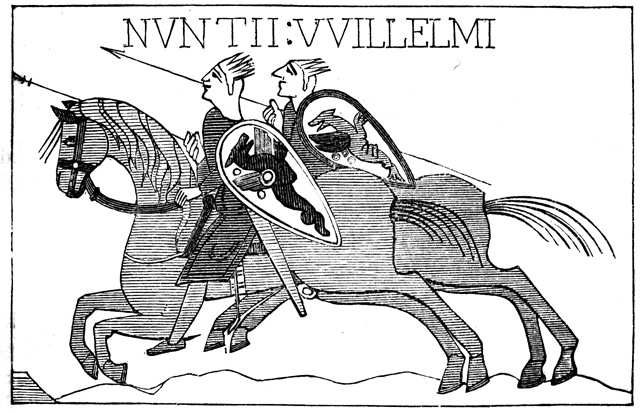 BAYEUX TAPESTRY
divendres, 23 de maig del 2014
LIVRE-SE DO VOTO E VOTE LIVRE LIBREMENTE NO PAÍS DAS JO'ANETTES E DOS CAPUCHOS QUE MENDIGAVAM E MENDIGAM AGORA POR VEZES SEM CAPUCHO E SEM ORDENS E SEM RELIGIÃO NAS RUAS E RUELAS DE LISBOA UM FESTIM PARA SELFIES COM MENDIGO DE SANDÁLIAS E ALFORGE ÀS COSTAS, BEBENDO, ABENÇOANDO, AMALDIÇOANDO NAMORANDO COM VELHAS DESDENTADAS E CANTANDO COMO OS FRADES CAPUCHOS DO XVIII OU MESMO DO XXIº SÉCULO LISBOETA
E O POVO?
CHEIO DE GRAÇA E DESGRAÇA TÍPICA
SERÁ ONTEM HOJE E AMANHÃ APENAS UMA MULTIDÃO BAÇA
IGUALMENTE DESEMPREGADA
SOMBRIA
E UNIFORME
E SEGUE JÁ PRÓ GAIATO QUE GERE GAIATOS...
HOJE A POPULAÇA DE LISBOA NÃO TEM PITORESCO, NÃO TEM FISIONOMIA, NEM OBVIAMENTE ADMITIMO-LO NÃO TEM CARÁCTER--UMA MULTIDÃO BAÇA E SOMBRIA DE PAINELEIROS -TYPOS NACIONAES - DAS MULHERES DE LEIRIA QUE APREGOAM ROSÁRIOS DE PINHÕES DAS REGATEIRAS DE MELANCIA DE SETÚBAL ENFIM TODA UMA FAUNA E FLORA EXÓTICA QUE DEMANDAVA LIVREMENTE OS PALHAÇOS ALFACINHAS DE LESBOA QU'ERA BOA COMÓ MILHO
AMESTRADO NAS LETTRAS PELO CONTACTO DOS JORNAES O GAIATO REDIGIRÁ O SEU FOLHETIM OU BE-LOGUE...E BOTARÁ NO NAZIONAL PORREIRISMO DO TITIO BELMIRO OU DO PRIMO AMORIM OU MESMO DO SECUNDO GALARZA OU SEGUNDO AMORIM PRÓ CASO DO LIVRE AO CHEQUE CARECA TANTO FAX.... E INDA DIZEM QUE BOM PAE DE FAMIGLIA É O GAIATO AL FACÍNORA
QUE NA CARECA DO ASSIS OU DO ASSAD
OU DO RELVAS DA BARCIA DOS INFERNOS
CHEIO DE GRAÇA E DESGRAÇA TÍPICA
SERÁ ONTEM HOJE E AMANHÃ APENAS UMA MULTIDÃO BAÇA
IGUALMENTE DESEMPREGADA
SOMBRIA
E UNIFORME
E SEGUE JÁ PRÓ GAIATO QUE GERE GAIATOS...
HOJE A POPULAÇA DE LISBOA NÃO TEM PITORESCO, NÃO TEM FISIONOMIA, NEM OBVIAMENTE ADMITIMO-LO NÃO TEM CARÁCTER--UMA MULTIDÃO BAÇA E SOMBRIA DE PAINELEIROS -TYPOS NACIONAES - DAS MULHERES DE LEIRIA QUE APREGOAM ROSÁRIOS DE PINHÕES DAS REGATEIRAS DE MELANCIA DE SETÚBAL ENFIM TODA UMA FAUNA E FLORA EXÓTICA QUE DEMANDAVA LIVREMENTE OS PALHAÇOS ALFACINHAS DE LESBOA QU'ERA BOA COMÓ MILHO
AMESTRADO NAS LETTRAS PELO CONTACTO DOS JORNAES O GAIATO REDIGIRÁ O SEU FOLHETIM OU BE-LOGUE...E BOTARÁ NO NAZIONAL PORREIRISMO DO TITIO BELMIRO OU DO PRIMO AMORIM OU MESMO DO SECUNDO GALARZA OU SEGUNDO AMORIM PRÓ CASO DO LIVRE AO CHEQUE CARECA TANTO FAX....
E INDA DIZEM QUE BOM PAE DE FAMIGLIA É O GAIATO AL FACÍNORA
O VOTO É LIVRE NUM CARECA QUALQUER a 23.05.2014 às 19:34
E MAIS VALE O LIVRE NA CARECA DO TAVARES RICO OU DO PINTO-TE TODOQUE NA CARECA DO ASSIS OU DO ASSAD
OU DO RELVAS DA BARCIA DOS INFERNOS
Subscriure's a:
Missatges (Atom)